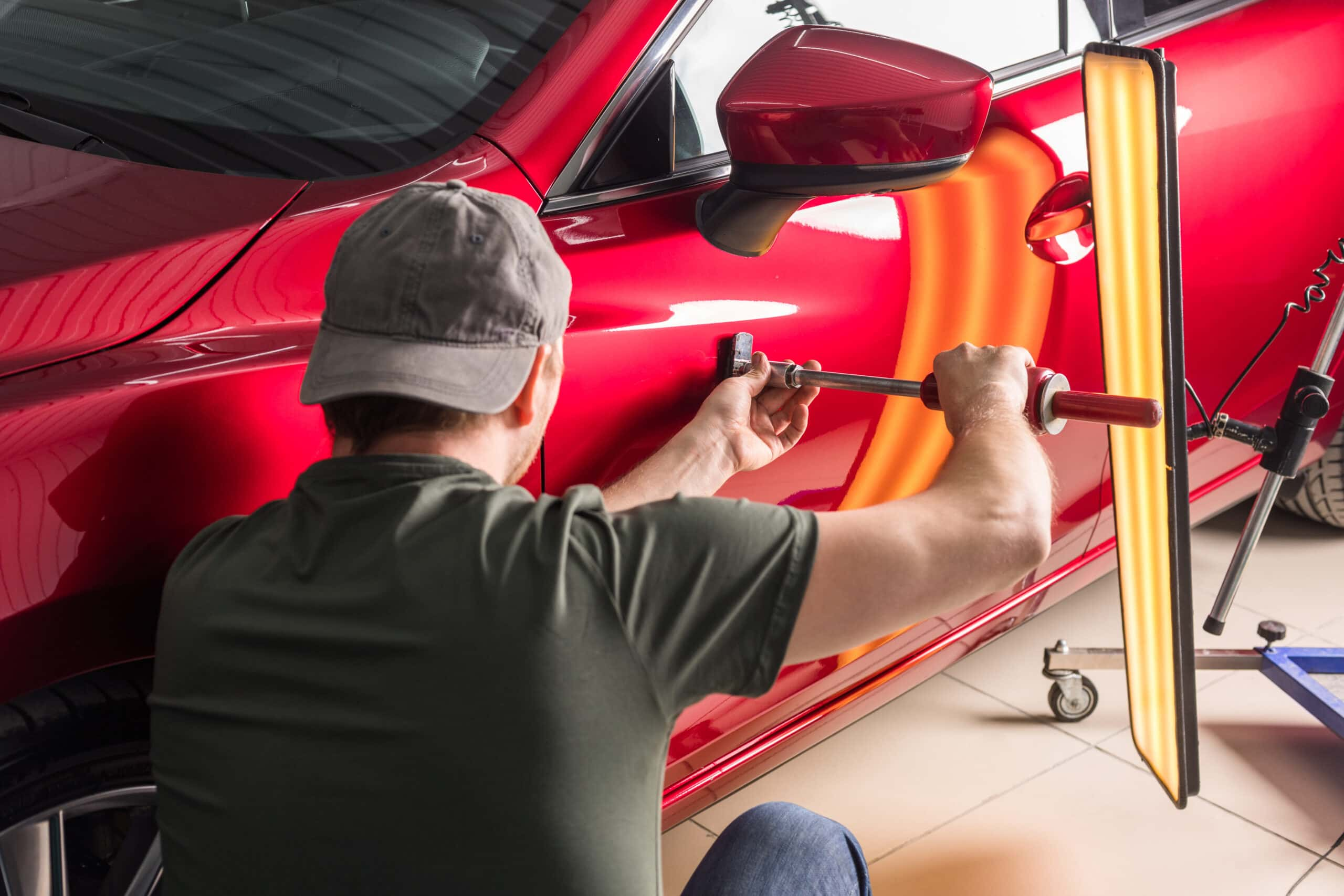
The core of paintless dent repair lies in the technician’s ability to reshape metal without disturbing the factory finish. While many vehicle owners assume that size dictates the repair method, Phelps emphasizes that depth, paint integrity, and the physical location of the damage are the true deciding factors. Smooth, shallow impacts—such as those from shopping carts or hail—frequently allow for a restoration that preserves the original paint, provided the metal has not been stretched past its elastic limit.
Technicians must navigate complex structural hurdles during the process. Accessing the backside of a panel is essential for applying the controlled pressure required to smooth out imperfections. Areas reinforced by wiring, braces, or sharp body lines often complicate this work, sometimes rendering a panel unsuitable for this approach. Furthermore, the condition of the paint is paramount; any cracking or chipping usually necessitates conventional body work rather than paintless techniques. Even the history of the vehicle plays a role, as previous repairs or the presence of body filler can alter how the metal reacts to specialized tools. Ultimately, a thorough professional inspection remains the only reliable way to determine if a vehicle is a candidate for this non-invasive restoration.


Comments (0)
No comments yet. Be the first!