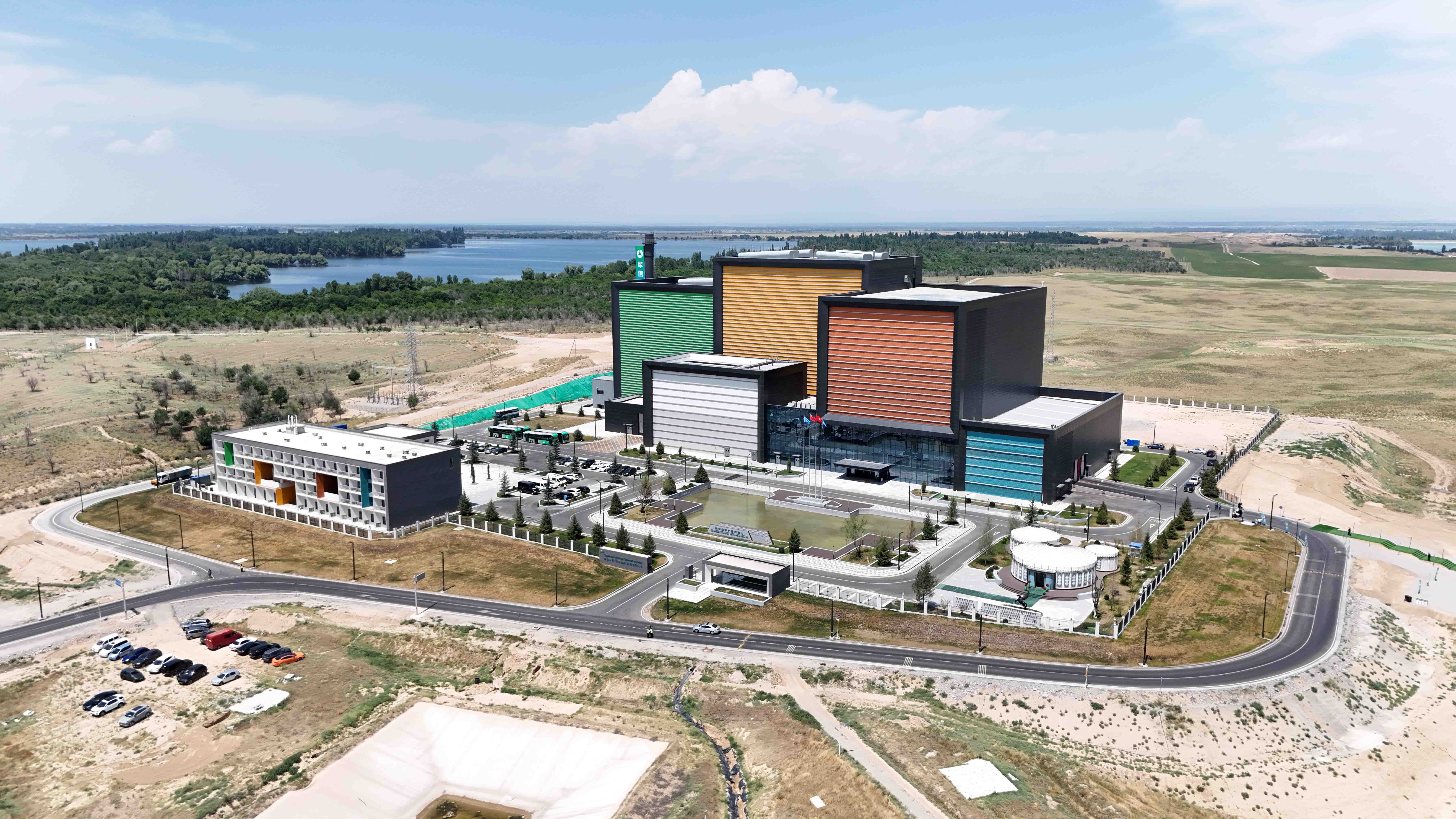
The facility, located a short drive from downtown Bishkek, represents a significant shift in regional waste management. Where residents once faced the hazards of a sprawling, odor-plagued landfill, they now find a high-tech plant designed to convert refuse into electricity. The project, operated by China’s Hunan Junxin Environmental Protection Co., Ltd., currently processes 1,000 tons of waste daily, with the capacity to scale up to 3,000 tons. Beyond waste reduction, the plant generates approximately 146 million kilowatt-hours of power annually and cuts carbon emissions by roughly 100,000 tons per year.
Building the plant required navigating Kyrgyzstan’s challenging climate, including winter temperatures dropping to -20 C and complex logistics across the Tianshan Mountains. Rather than simply importing Chinese methods, engineers adapted the facility’s design and technical routes to match local waste composition and geological conditions. For local staff like 23-year-old Medetbekova Kumushai Tinchitikovna and 25-year-old Akylbekov Aktan Bektashovich, the project has served as a technical training ground. Because Kyrgyzstan lacked specialized education in waste-to-energy fields, the company implemented a rigorous mentorship program, pairing local hires with experienced Chinese engineers to master everything from chemical analysis to control-room operations.
The project’s success has already spurred interest in further expansion. Similar initiatives are underway in Issyk-Kul and Osh, with potential developments planned for Kazakhstan. As delegations from other nations visit the site to study its impact, the plant stands as a tangible example of how regional cooperation can translate high-level environmental goals into functioning, local infrastructure.



Comments (0)
No comments yet. Be the first!