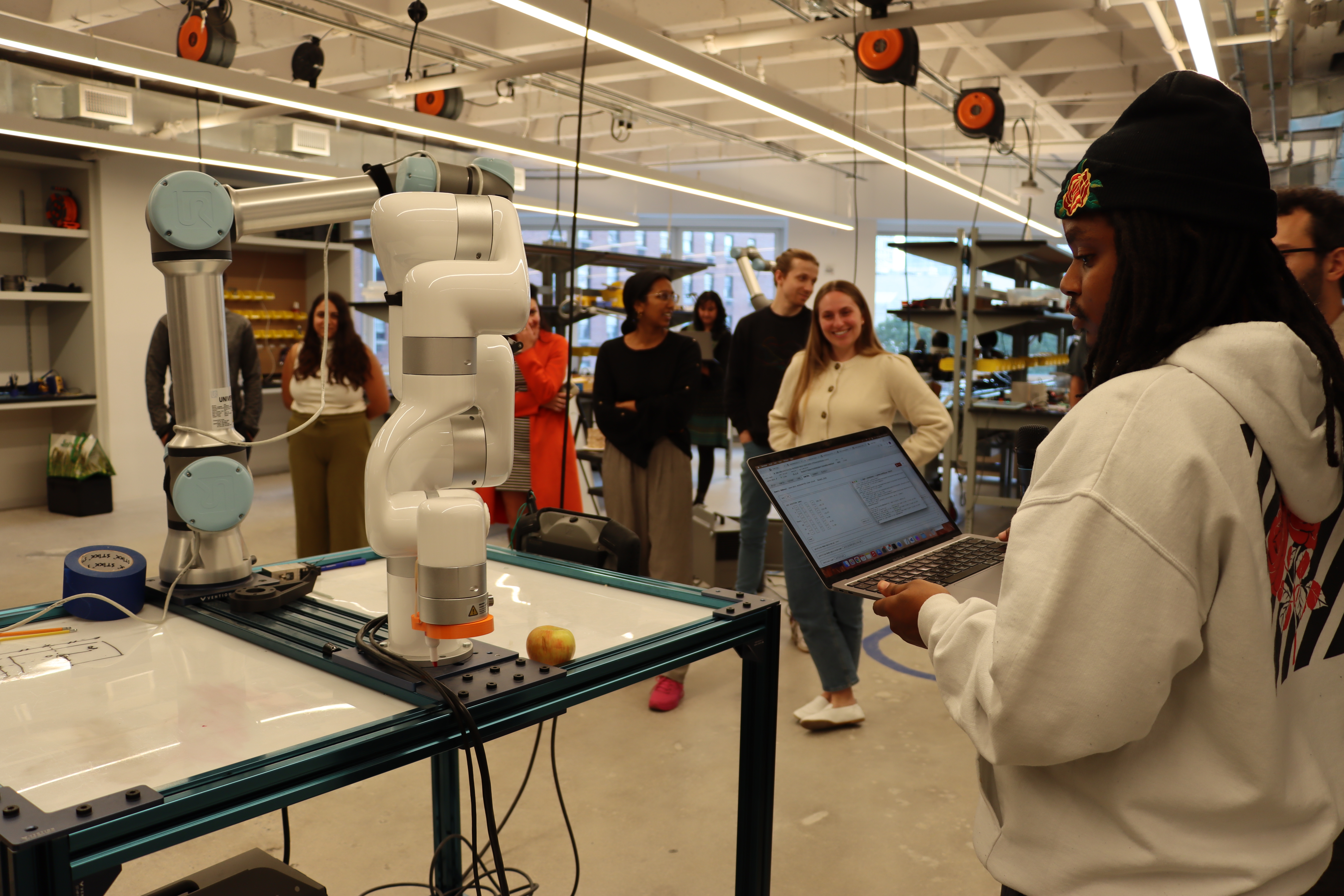
The system achieves its dexterity by splitting the task: visual servoing guides a cutting tool along tape seams typically only 1 to 2mm wide, while a fine-tuned SmolVLA model manages the unpredictable, contact-heavy process of peeling back flaps. Both components operate as native services on an NVIDIA Jetson Orin Nano, utilizing Viam’s infrastructure to manage edge machine learning deployment without custom architectural overhead.
Efficiency in the development cycle remains a primary focus of the project. Viam engineers completed the robot’s training in just five hours, collecting 125 demonstrations via VR controllers over four days. By leveraging Viam’s existing capture layer, the team bypassed the traditional weeks-long process of building teleoperation rigs and syncing camera streams to joint states. The resulting dataset and model code are available on Hugging Face, allowing other researchers to benchmark their own systems against the setup.
Shannon Bradshaw, SVP of Product and Education at Viam, emphasized that the platform’s strength lies in its integration. Rather than forcing developers to script disparate systems together, Viam provides a unified API to combine classical motion planning with learned policies. Attendees at IROS 2026 can test the technology firsthand at Booth 828, where the company is hosting live demonstrations of both the BoxBot and the underlying VR teleoperation tools.



Comments (0)
No comments yet. Be the first!