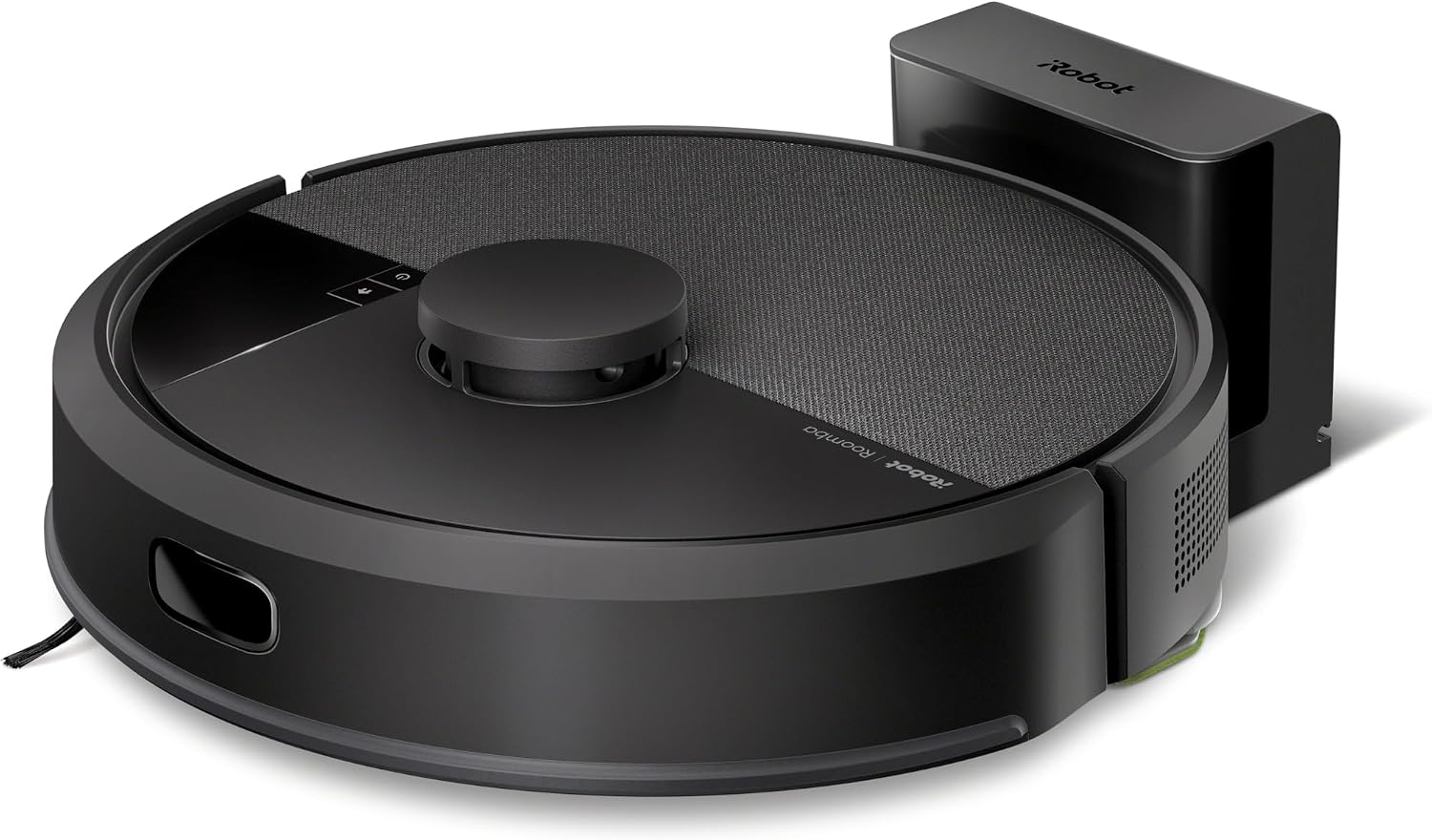
The system centers on a main unit equipped with a mechanical deployment arm. This arm allows the primary robot to carry and release an ultra-compact companion into tight spaces beneath furniture or cabinets that the larger unit cannot access. Both robots operate on a shared home map, communicating in real-time via the Roomba Home App to coordinate cleaning tasks across multi-room environments.
The main unit features a cylindrical chassis designed to house a high-performance motor, a high-capacity battery, and a wet-and-dry floor-washing module. Its PowerSpin Max Roller Mop applies 46N of downward pressure, while an internal heater generates steam to dissolve dried-on grime. To maintain hygiene, the unit includes a self-cleaning roller and a hot-air drying function to prevent moisture damage on wooden surfaces. The companion robot, based on the Roomba Plus 575 platform, utilizes a PerfectEdge mop pad that extends 31mm to clean corners and baseboards.
Autonomous navigation is managed through ClearView Pro dual-line LiDAR and PrecisionVision AI, supplemented by top-mounted cameras on the main robot for elevated room mapping. The entire system docks at a centralized AutoWash station, which handles water replenishment, mop cleaning, and dust disposal. iRobot CEO Hao Li noted that the dual-robot approach represents a shift toward specialized, collaborative systems rather than forcing a single unit to handle every aspect of home maintenance.



Comments (0)
No comments yet. Be the first!