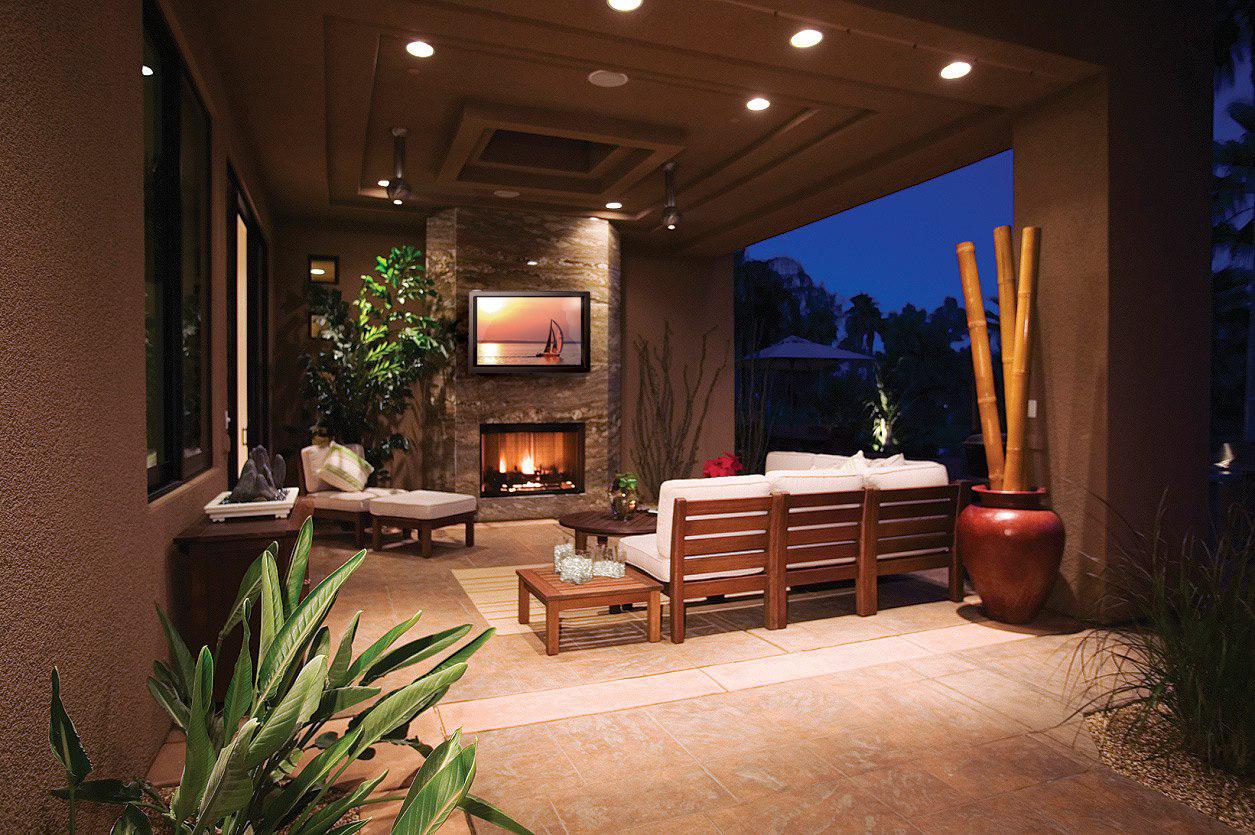
The primary distinction between a standard home unit and a purpose-built outdoor television lies in the housing. Indoor displays rely on stable, climate-controlled environments; they lack the sealed ports and thermal management required to combat humidity, insects, or temperature fluctuations. An outdoor-rated model, such as those with an IP55 ingress protection rating, provides a robust barrier against dust and water jets, ensuring longevity that a residential TV cannot match.
Brightness is the next critical factor for outdoor performance. Measured in nits, screen brightness must be high enough to counteract ambient daylight, which frequently washes out standard displays. Specialized models often feature 2,000-nit panels and light sensors to adjust visibility automatically from bright afternoons to evening hours. Before mounting a screen, evaluate the installation site: a shaded patio requires different specifications than a high-glare poolside area. Planning for connectivity—ensuring stable Wi-Fi, protected power, and adequate audio—is essential to prevent the frustration of retrofitting cables after the mount is secured.



Comments (0)
No comments yet. Be the first!