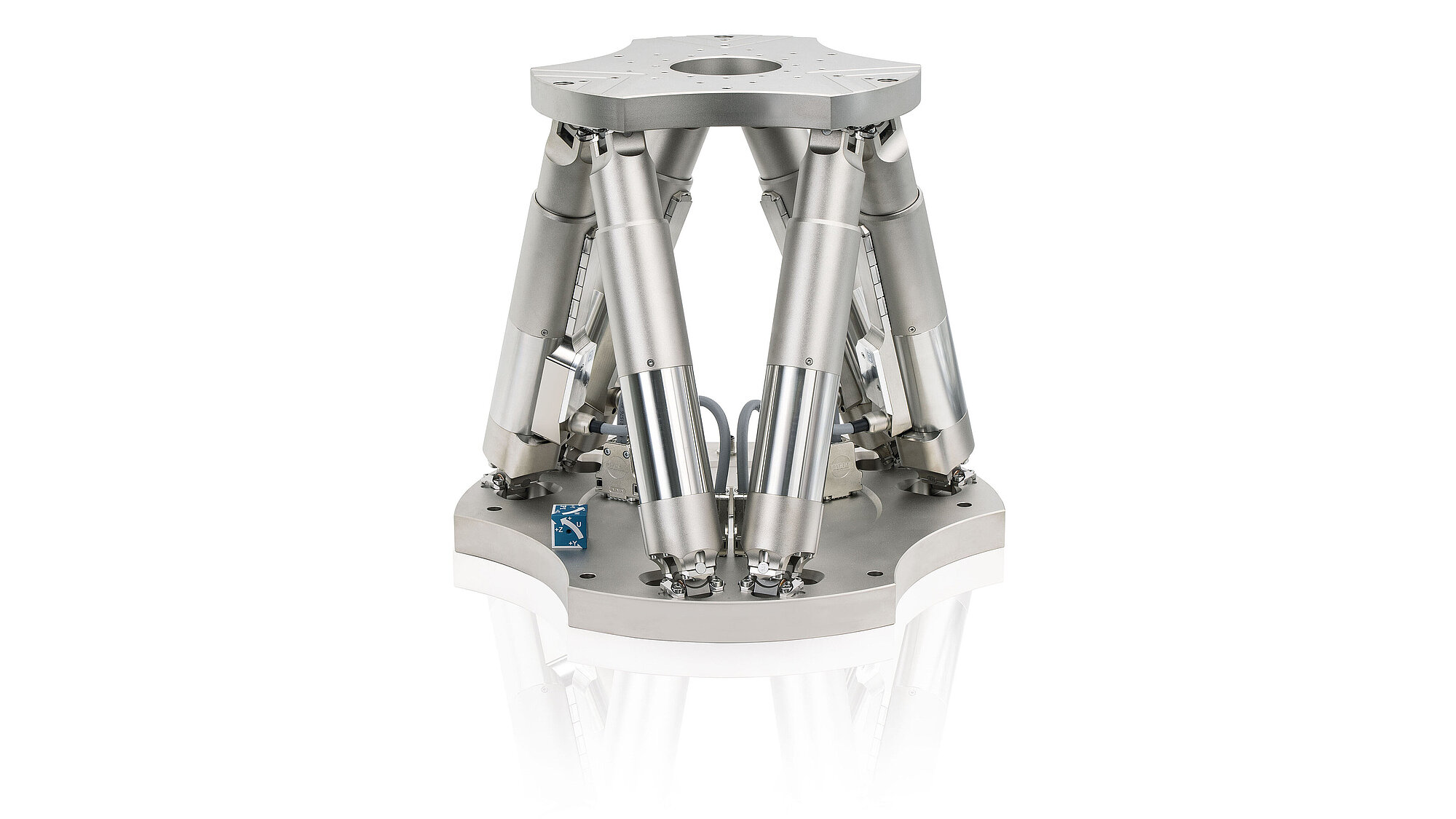
The H-850.H2IV distinguishes itself through a parallel-kinematic architecture. By moving all six actuators simultaneously to control a common platform, the system achieves higher structural stiffness and lower moving mass compared to traditional serial-axis stacks. This design choice eliminates the cable management complexities that typically plague vacuum chamber installations, as the wiring remains stationary during operation.
Key performance metrics include repeatability of ±0.2 µm and vacuum compatibility reaching 10⁻⁶ hPa. Safety is managed through a self-locking drive mechanism, which holds a 200 kg horizontal load or 50 kg in any orientation without requiring active power. This feature prevents drift during long-duration measurements or unexpected power interruptions. To mitigate deployment risks, PI provides PIVirtualMove software, allowing teams to simulate force, torque, and center-of-gravity constraints before physical integration into beamlines or lithography systems.


Comments (0)
No comments yet. Be the first!