Bacterial meningitis cases rose from around 10–20 a month to 108 in October, with another 100 recorded in November, Dr. Nidal Ghunaim, the ministry’s deputy director general of primary healthcare, said. Fifteen people have died from the illness this year, including five between August and October. The UN Office for the Coordination of Humanitarian Affairs (OCHA) reported that 77% of cases were in babies under one year old. Laboratory tests suggested a link to enteroviruses, which can spread through water.
The ministry asked the World Health Organization and UNICEF to provide laboratory supplies and antibiotics and help establish isolation wards. It said children face particular danger from meningitis, which inflames the membranes around the brain and spinal cord. Oxfam International warned Monday that damage to wastewater treatment plants has increased the risk of exposure to water contaminated with pathogens. OCHA said on November 18 that 45% of surveyed households were living less than 10 metres from sewage and sludge after flooding.
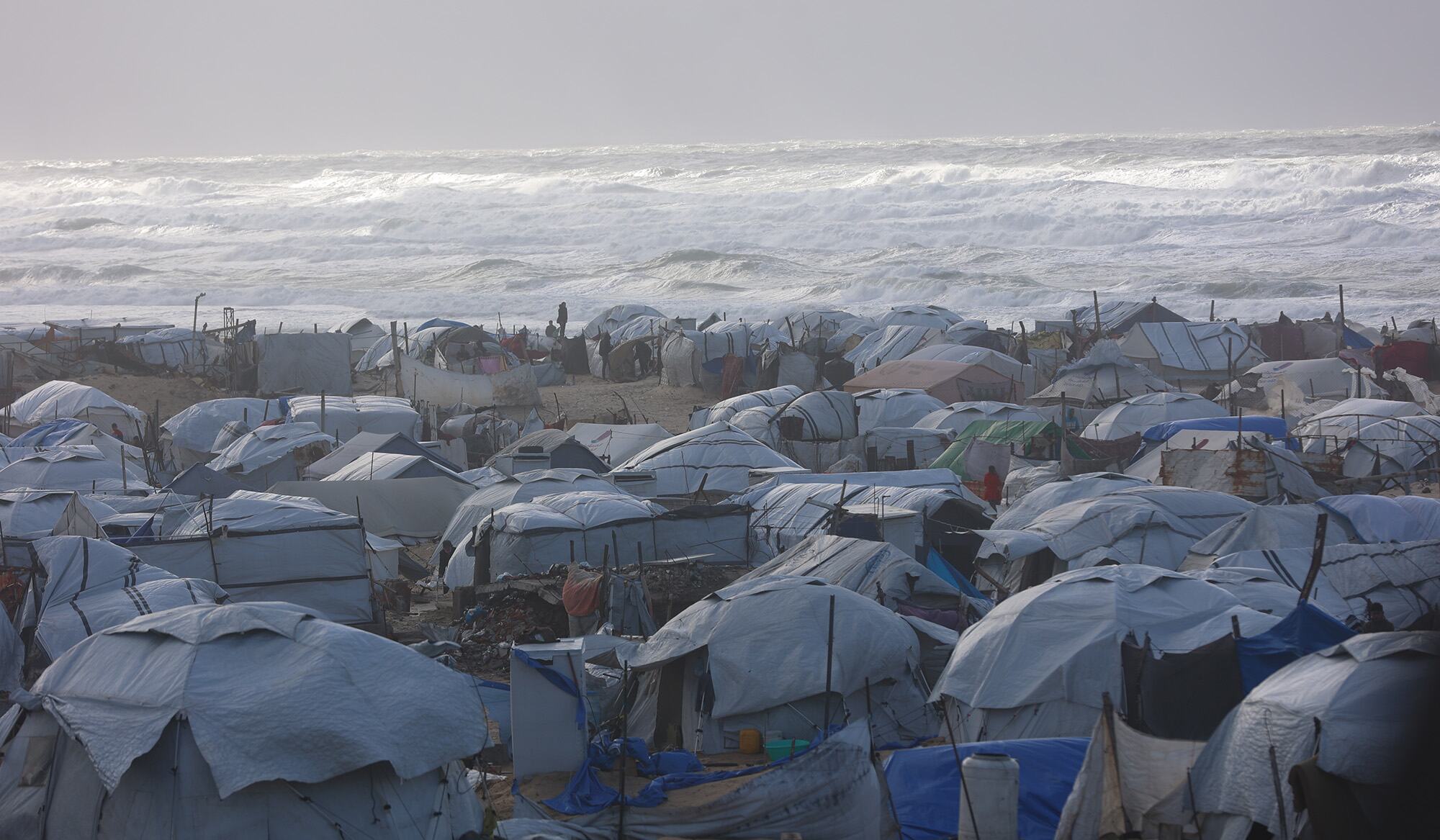
Officials also said Israel’s restrictions on “maintenance spare parts, sterilization materials, and fuel” were hampering efforts to contain transmission. Winter rains earlier this month destroyed tens of thousands of tents, which had been sheltering more than 1 million people, and flooded encampments with rainwater mixed with sewage. The ministry said it held the Israeli occupation “fully and directly responsible” for the outbreak.
Families described the effects at Al-Aqsa Martyrs Hospital. Bahaa al-Sous said his newborn daughter Ilat became ill after the storm; after she completed treatment, he took her twin sister, Elin, to hospital when she too became sick. A woman identified as Iman said she had to buy some medication for her six-year-old daughter from private pharmacies. Pediatrician Dr. Iyad Abu Mu’ailaq warned that delayed or inadequate treatment can leave children with lasting hearing or sight loss.
Ahmed Abu Rukba, a representative of al-Iyadat camp in central Gaza, said residents need replacement tents and sand to raise the low-lying camp ahead of more expected storms. “If we don’t get the sand and the tents,” he said, “we will definitely flood again, and the children’s tragedy will be repeated.”


Comments (0)
No comments yet. Be the first!