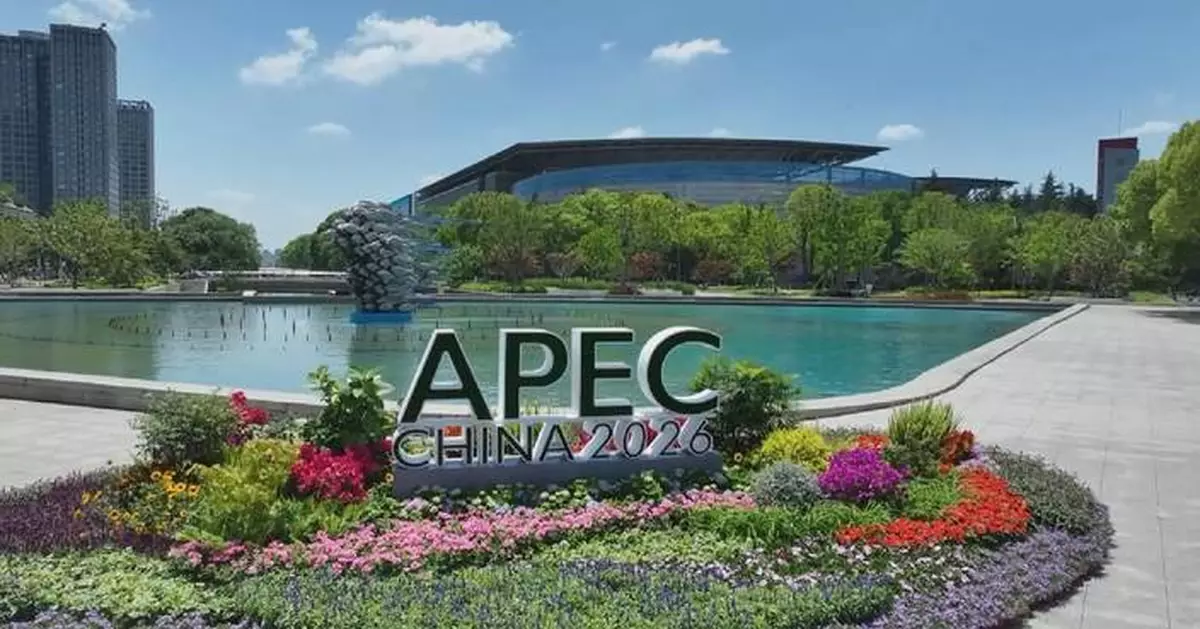
The 33rd leaders’ meeting is scheduled for November 18 and 19 in Shenzhen, Guangdong Province. The gathering will be accompanied by the APEC CEO Summit and a joint meeting of foreign and trade ministers. China previously hosted the forum in Shanghai in 2001 and Beijing in 2014.
Yeo said China’s economy and global influence had grown across those three host cities. He described its potential role as “a soft but important leadership, not to dominate but to facilitate,” adding that China would show responsibility for the state of the world.
Customs data showed that China’s trade with other APEC economies reached 24.07 trillion yuan ($3.61 trillion) in the first three quarters of 2026, up 23.9 percent year on year. That was 60.3 percent of China’s total foreign trade, 2.5 percentage points higher than a year earlier and the fastest growth for the corresponding period in nearly five years. China is the largest trading partner of 13 APEC economies.
Yeo said relations between China and the United States, which together accounted for about 69.41 percent of APEC’s economic output in 2025, should remain relatively stable. He said that stability was “based not on ideology but on a balance of interests.” The meeting’s theme is “Building an Asia-Pacific Community to Prosper Together,” with openness, innovation and cooperation as its priorities. Yeo described inclusive regional cooperation as a long-term goal requiring consistent effort from one meeting to the next, and said he had no doubt China would show that consistency.
On China-ASEAN relations, Yeo returned to his mango sticky rice metaphor for the Southeast Asian grouping: ASEAN’s cohesion should be strong but flexible. He said ASEAN sought friendly ties with all major powers and valued China’s friendship, adding that China did not insist on an exclusive relationship and understood ASEAN’s wish to keep its foreign policy open in all directions.


Comments (0)
No comments yet. Be the first!