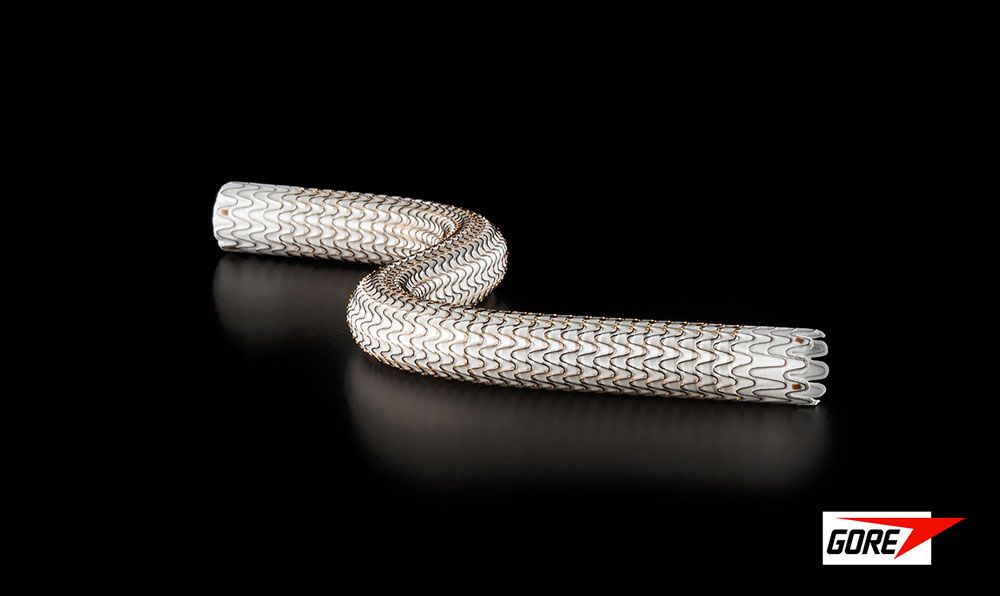
The approval arrives alongside three-year findings from the EMBRACE Registry, which tracked real-world performance of the device in complex aortic procedures. Data from the registry showed high success rates, with the FEVAR analysis reporting 97.5% vessel-level primary patency and 93.9% freedom from target vessel instability. In the BEVAR cohort, the device maintained 94.0% primary patency and 88.4% freedom from instability over the same three-year period.
Dr. Gustavo Oderich, Professor and Chief of Vascular and Endovascular Surgery at Baylor College of Medicine, noted that the availability of an FDA-indicated bridging stent backed by long-term evidence addresses a critical need for standardization in these challenging cases. The VBX Stent Graft is designed to provide flexibility and deployment accuracy, acting as a bridge between aortic endografts and renal or mesenteric arteries to sustain blood flow. With this expansion, the device gains a standardized clinical footing in the U.S. market, following a similar European approval granted in 2025.


Comments (0)
No comments yet. Be the first!