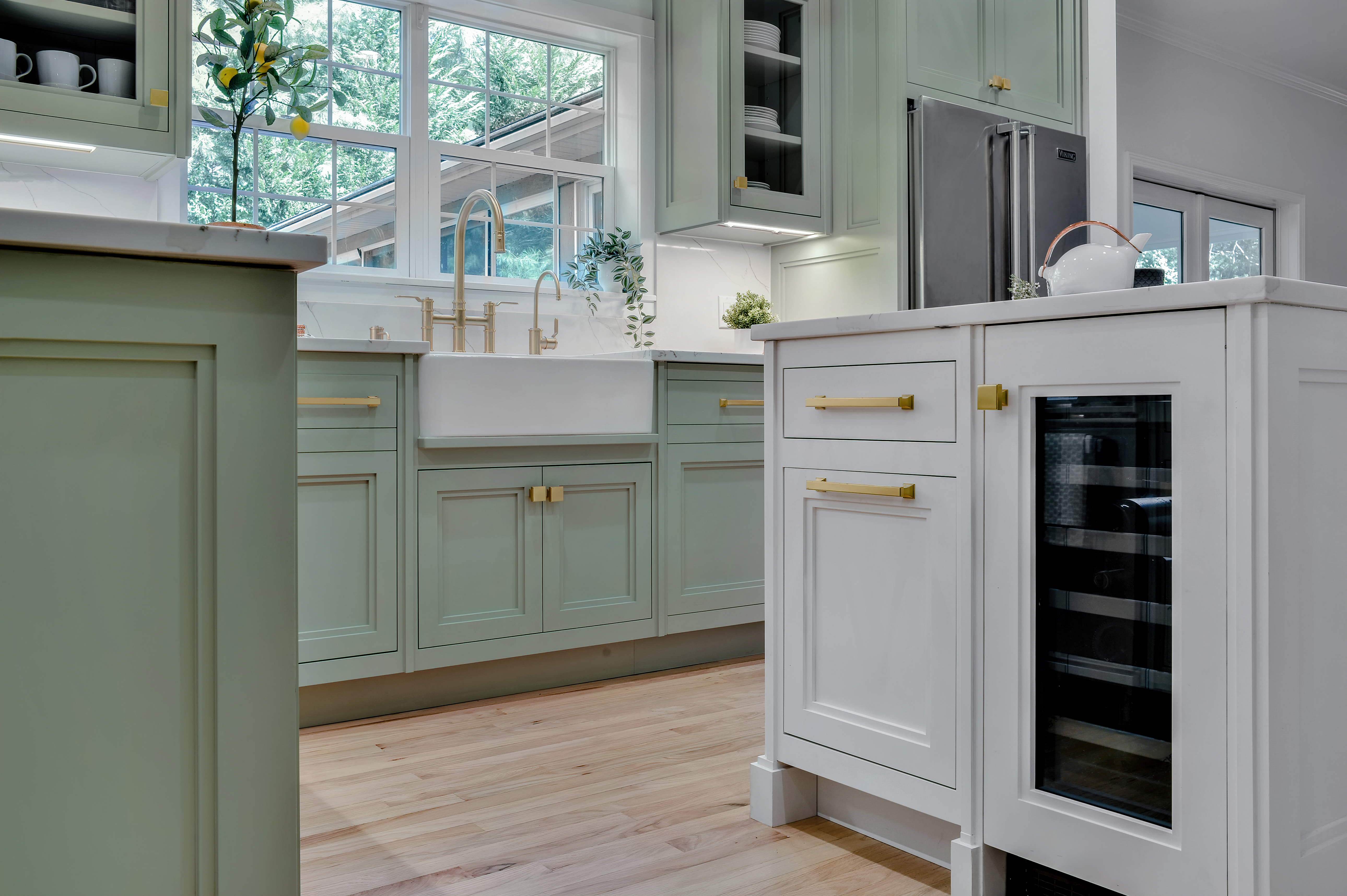
Inset cabinets feature doors that sit flush within the frame, offering a traditional, furniture-grade appearance. This precise construction demands expert installation, as the tight tolerances make these cabinets sensitive to humidity and seasonal shifts. Wilinski points out that homeowners may require periodic adjustments to keep the doors aligned, and the internal framing slightly reduces the overall storage footprint.
Conversely, overlay cabinets rest on the exterior of the frame, providing a more continuous, modern surface. Because they do not rely on a precise internal fit, they are generally more forgiving during house settling and require less frequent maintenance. Their design allows for wider openings and increased storage volume, making them a practical choice for smaller kitchens. While inset cabinets carry a premium price tag due to the labor-intensive craftsmanship required, overlay options offer greater budget flexibility and easier daily cleaning due to fewer exposed edges and gaps.


Comments (0)
No comments yet. Be the first!