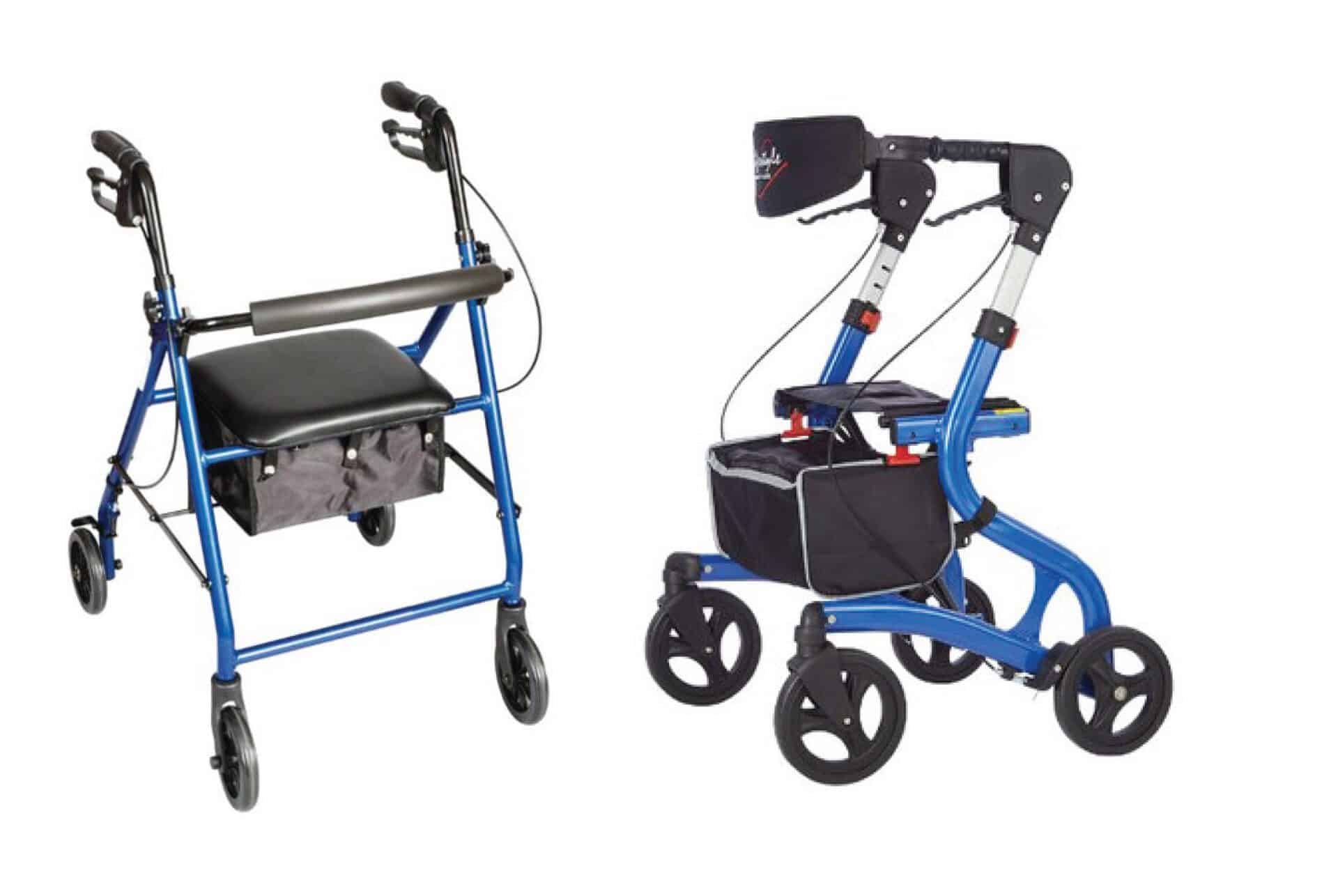
A standard walker, characterized by its four-legged frame, provides a rigid base for individuals who require significant assistance with balance or weight-bearing. Because these devices do not move independently, users must lift or slide the frame forward with each step, granting them high levels of control but demanding more physical effort. In contrast, a rollator utilizes three or four wheels, allowing the device to glide forward as the user walks. This design facilitates greater mobility but introduces a reliance on hand strength and coordination to operate the integrated brakes and steering.
Practical factors often dictate the final selection. Rollators typically feature built-in seating for rest during longer excursions, a luxury rarely found on standard walkers. However, the environment plays a critical role, as rollators require more turning space and may be difficult to maneuver on uneven surfaces or stairs. Proper handle height is essential for both devices to prevent poor posture, and professional guidance is strongly recommended when navigating choices following surgery or significant changes in mobility. A healthcare assessment ensures that a user possesses the necessary grip strength to safely manage a rollator’s braking system, ensuring the device remains a support tool rather than a hazard.


Comments (0)
No comments yet. Be the first!