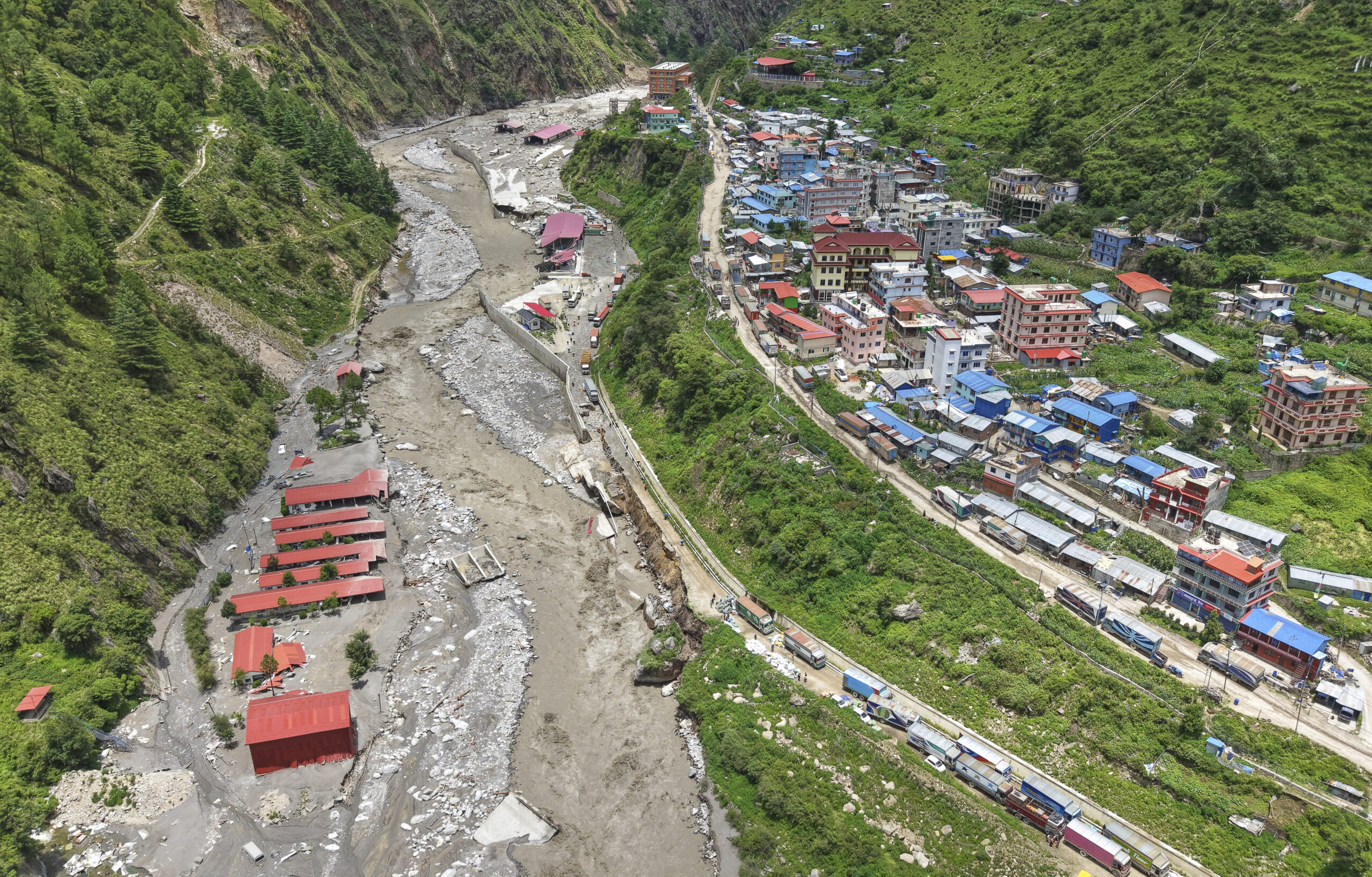
The scale of destruction in the Rasuwa district is immense, with estimates suggesting 20,000 homes were swept away by the debris flow. Survivors describe a terrifying, instantaneous impact; a local police officer in Syabrubesi recounted how a wave of slurry, boulders, and ice engulfed multi-story buildings in seconds, leaving him one of only three survivors from his station’s staff. The force of the slide was so significant that it registered as a 4.4 magnitude earthquake on regional seismographs.
Geologists point to a massive glacial collapse as the primary trigger. Satellite analysis by researchers, including Daniel Shugar of the University of Calgary, indicates a block of ice nearly 2,000 feet wide broke away and plummeted over a vertical kilometer. The impact pulverized the glacier into water and debris, creating a 30-meter-high wave that scoured the valley floor. While experts are still investigating all contributing factors, the event highlights the growing instability of the Himalayas—the world’s 'third pole'—where rising temperatures have accelerated the melting of over 160 glaciers in recent decades.
Crisis Response and Climate Context
United Nations humanitarian chief Tom Fletcher has mobilized $2 million in emergency funding to address the critical shortage of clean water, shelter, and medical care for the displaced. The Nepal Red Cross has warned of a desperate situation, noting that entire communities have been stripped of their essential resources. This tragedy mirrors recent glacial-related disasters in Switzerland and Italy, fueling scientific warnings that the region’s massive ice stores are becoming increasingly hazardous as global temperatures climb.


Comments (0)
No comments yet. Be the first!