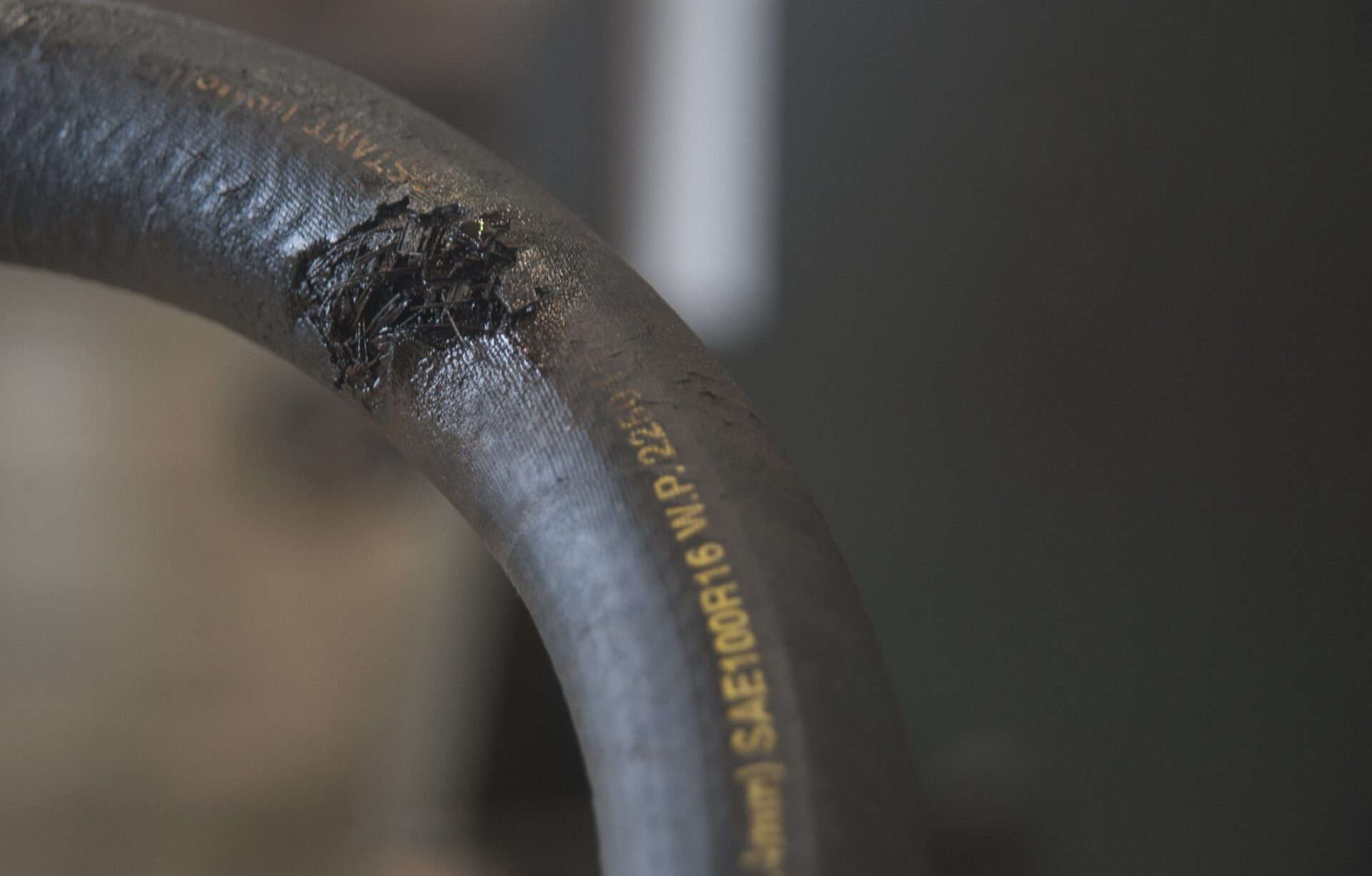
Hydraulic hoses serve as the arteries of industrial machinery, constantly subjected to extreme pressure and harsh environmental stressors. According to Bonner, the most immediate red flag is visible leakage. Even minor drips or dampness around fittings suggest that the material integrity is already compromised. If ignored, the pressure within the system will inevitably turn a manageable leak into a major rupture.
Beyond external leaks, operators should monitor for physical degradation of the hose surface. Cracking, blistering, and bubbling are clear indicators of internal damage or environmental fatigue from heat and UV exposure. Similarly, if a hose loses its natural flexibility and becomes brittle, it is likely reaching the end of its service life. These symptoms, coupled with unexplained pressure drops or signs of abrasion from rubbing against machinery, necessitate immediate inspection. Proactive maintenance remains the most effective strategy for preventing costly downtime and ensuring operator safety in demanding industrial environments.


Comments (0)
No comments yet. Be the first!